


One of the most relevant discoveries in the science of aging over the last few decades is also one of the least noticed in traditional clinical practice. It is not an infection, it does not manifest with acute pain, and it rarely appears as a direct diagnosis in a standard check-up.
Even so, this phenomenon is present in virtually all processes associated with biological aging. The technical term for this is Inflammaging: the low-grade chronic inflammation that silently takes hold and accelerates your body’s clock.
What is silent inflammation, exactly?
Inflammation is, originally, a defense mechanism. When you suffer an injury or infection, it acts acutely to protect and heal your body. The problem begins when this response ceases to be an isolated event and becomes a constant state.
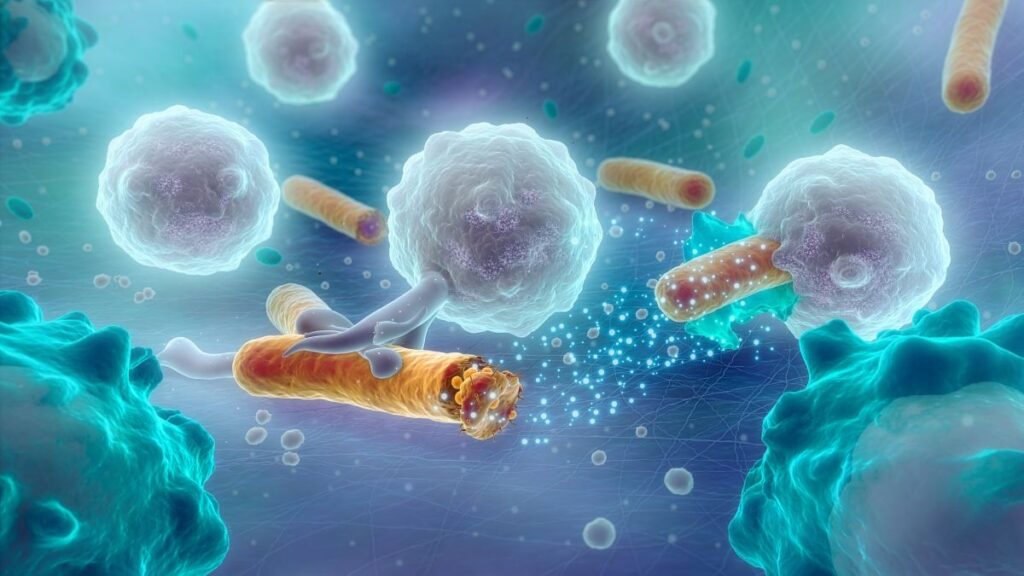
In silent inflammation, your immune system remains in a state of baseline activation: the levels of inflammatory cytokines are discreetly elevated all the time. Since there are no classic signs (pain, heat, or swelling), the process evolves freely, impacting multiple systems in a slow and progressive manner.
According to Claudio Franceschi, the researcher who coined the term, this continuous inflammatory state is the link that connects aging to the main chronic diseases of today.
Why does inflammation accelerate aging?
Imagine chronic inflammation as a “smoldering fire” that wears down your cells daily. It acts as a biological amplifier of damage through four main pillars:
- Cumulative cellular damage: The inflammatory state increases oxidative stress, compromising the integrity of your DNA and essential proteins.
- Mitochondrial dysfunction: Inflammation interferes with the efficiency of the mitochondria, reducing your energy production and increasing central fatigue.
- Cellular senescence: It stimulates the accumulation of “zombie” (senescent) cells, which stop functioning but continue to spread inflammatory mediators to neighboring cells.
- Metabolic changes: It is directly associated with the onset of insulin resistance, making glucose regulation difficult even in those who do not yet have diabetes.
Studies published in the journal Nature Medicine demonstrate that this inflammatory baseline is the point of… starting point for conditions ranging from cardiovascular diseases to premature cognitive decline.

The Role of Modern Lifestyle
Silent inflammation does not arise by chance; it is, to a large extent, induced by the environment in which we live. The human body was not designed to handle the excess of ultra-processed foods, frequent blood sugar spikes, and the chronic stress that constantly keeps cortisol elevated.
Furthermore, sleep deprivation and intermittent sedentary behavior—spending many hours sitting, even if you work out once a day—act as triggers that prevent proper cellular recovery. The result is the great paradox of modern health: you can eat “relatively well,” not be overweight, have normal clinical tests, and yet still be living under a chronic inflammatory state.
Is it possible to modulate this “engine”?
The good news from longevity science is that inflammation can be modulated. Although we cannot pause chronological time, we have tools to reduce the intensity of the biological impact.
Strategies such as regulating glycemic metabolism, supporting the gut microbiome, optimizing sleep, and managing stress act synergistically. Understanding silent inflammation allows us to shift from a reactive medical model—which waits for disease to appear—to a precise model that intervenes in the early processes.
True health is not just the absence of disease; it is ensuring that your internal engine runs with as little wear and tear as possible over the years.
Selected Scientific References:
- FRANCESCHI, C. et al. Inflamm-aging. Ann NY Acad Sci, 2000.
- FURMAN, D. et al. Chronic inflammation in the etiology of disease. Nat Med, 2019.
- EPEL, E. S. et al. Accelerated telomere shortening in stress. PNAS, 2004.
- IRWIN, M. R. Sleep and inflammation. Nat Rev Immunol, 2015.
- CALDER, P. C. et al. Dietary factors and inflammation. Nutrients, 2017.